Showing posts with label education. Show all posts

Saturday, August 23, 2025

Musings on Home Education

 Why I Homeschool Our Children

A Brain Dump

I think that when people learn that I homeschool our children, they assume that they know why. Really, no one has ever asked me why I homeschool or questioned it in any way that I can remember. It's usually something like 'Do you homeschool?...Oh, that's wonderful. *Smiles at children*". It's nice to have a positive response from people, but I hear things from time to time that make me think that people assume they know why we homeschool, when they don't really. Honestly, I was asking myself today, "Do I even know why I homeschool?" Since I was happily homeschooled for most of my school years, leaving my early and trying days of first and second grade at a typically-flawed Christian school, far behind, it simply seemed natural to keep homeschooling. I wouldn't just set up lesson plans for my kids, I would pick up from where I left off on my own education and keep my nose in as many books as they did, and we would putter and hum our way through the crisp fall days with open-windows, the blanket-wrapped winter sick days that are mostly audiobooks, or winter snow days that are rushing to get one required subject done before hitting the sleds, and then float (or trudge as the case may be) into spring, interspersing scholarly endeavors with forays into the garden and lunch at the picnic table. I just wanted to live this life.


But of course, the real reason we are home educating our children, is that there are no schools in convenient distance that are inculcating the truths and virtues that we desire for our children - such as worship of the Creator, deep family relationships, and the high hilarities of language, Greek, Latin and English - among other things. That's a good justifying reason. 

But as I've now kept the home school ball rolling for 6 years, and the thought that our oldest may someday need more instruction than I can provide, I realized that my attachment to homeschooling was not merely one of principle. It is perhaps even more an attachment of fierce independence. Imagine - having another person, separate from our family, dictate my daily schedule - my child's teachers at some school having power over when we eat breakfast and what books we have to read and what time we have to go to bed at night. I inwardly recoiled at the thought, and pitied in my heart all the poor, slaving mothers who toil to keep their kids on the school's schedule. It made my blood hot to imagine myself losing my days of idyllic independence in order to be at the beck and call of another institution. I also reflected that this reaction is not exactly virtuous. But really, how can people say home schooling is hard, when they have to roll out of bed in the darkness to send their child to a school that probably has fluorescent lights in the classroom and no fresh flowers dropping dried petals and spider webs onto the spelling book? Not even mentioning the leftover bacon and fresh banana bread that may be acquired from the absurdly nearby kitchen during school hours, I believe that homeschooling can possibly be too idyllic to prepare children for the harsh realities of life in a fluorescent lit office cubicle. But I'm not afraid to defy that fear and give out spelling words from the kitchen, with my hands buried in sticky granola mixture, which will soon sustain the weary apprentice of cursive handwriting and spoil his appetite for lunch (oh dear, what are we having for lunch?). 

I do not disguise from myself that this idyll has its shortcomings. I do not imagine that home education can give a child all that they need, any more than a public education. These will each leave a child with gaps, of either community or family or knowledge, that they will long to fill. But we will pray about filling those gaps. Ultimately, whatever way we prayerfully choose to educate our children, the education is something that God has provided, and we give thanks for the blessings and trust God to provide what seems to lack. My feelings about homeschooling may come and go, and be better or worse from day to day, but the life that God has provided for us is a reality for which I can give thanks, even as time brings changes. 

Tuesday, June 20, 2017

L. M. Montgomery on Living Education

I love reading L. M. Montgomery's works. They are just delicious. With any of my favorite authors, I also love, when I am nearing the point of expecting any further enjoyment from them to be in the form of re-reads, to discover a book I have never read. Finding an old green-covered copy of Jane of Lantern Hill at the big city library, next to the familiar Anne books was a treat indeed. Is it really the same Montgomery? Yes, oh yes!

As with nearly all Montgomery's heroines, Jane's domesticity, sympathy and industry inspire me. In this particular work, Jane's relationship with her father is exceptionally lovely, and I appreciated these lines on her summer education under his tutelage. (For context: Jane had grown to hate the Bible because of being forced to read the Old Testament each evening under the critical gaze of her stern grandmother and severe aunt.)
When dad had converted Jane to the Bible, he set about making history and geography come alive for her. She had told him she always found those subjects hard. But soon history no longer seemed a clutter of dates and names in some dim, cold antiquity but became a storied road of time when dad told her old tales of wonder and the pride of kings...Thebes...Babylon...Tyre...Athens...Galilee...were places where real folks lived...folks she knew. And knowing them, it was easy to be interested in everything pertaining to them. Geography, which had once meant merely a map of the world, was just as fascinating.
'Let's go to India,' dad would say...and they went...though Jane would sew buttons on dad's shirts all the way...Soon Jane knew all the fair lands far, far away as she knew Lantern Hill...or so it seemed to her after she had journeyed through them with father.
 
~ Jane of Lantern Hill by L. M. Montgomery
What an inspiration for a living-books based education! But more than that, a reminder that the best things I will teach my children are things that I have learned myself to love and can pass on to them wrapped in the glow of my own delight.

  Views across the Bosphorus, Constantinople by Hermann Corrodi


Friday, December 9, 2016

The Wonder of Ancient Things

Notes from my recent read-through of Geoffrey Monmouth's History of the Kings of Britain: 

Ancient - truly ancient - history, has the potential of providing its students with a profound sense of smallness upon the stage of the universe as well as wonderfully tingly feelings of discovery - "Oh, I never knew that!" Knowledge is a great treasure. Knowledge of things far, far past has a unique value, because it is, as it were, dug from a very deep mine, and one feels privileged to glimpse such heavily unearthed treasure in the light of the reading chair lamp. Also, the more ancient the people and events, the more one feels in learning of them that here we are getting to the root of things and the beginning of the matter, and so everything begins to make more sense. Those are some of the impressions I received from reading Monmouth.

Some lessons:

First, the historical timeline - here I was blown away (all those tingly feelings): The poet Homer was an approximate contemporary to the prophet Samuel. And good old King Lear of Shakespearean fame, was a real king (so says Monmouth, and I rather believe him) - contemporary with the prophet Isaiah! As a newcomer to the study of really old history, I never realized that any history of our western tradition went so very far back into the days of the Old Testament. This did not make the Bible any more believable to me than it already is, but it made it feel closer, like the constant breeze of the sea suddenly blowing through a crack in the wall and giving you goosebumps. 

Friday, August 8, 2014

Eagerly Waiting

"Lord, give us much wisdom 
to teach our children your Word, 
so that when you come to them, 
they will be eagerly waiting."

 - Corrie Ten Boom


"The wind blows where it wishes, and you hear its sound, 
but you do not know where it comes from or where it goes. 
So it is with everyone who is born of the Spirit.” 
-John 3:8 ESV

Tuesday, November 13, 2012

Two Children's Songs

I love finding fun and singable ditties for teaching preschool kids - ones that have a good melody line and are not pure goofiness - and was feeling like something new today as I  pondered this morning's class over my breakfast. These two I came up with and can't wait to teach them!

B-L-U-E Spells Blue - to the tune of "Happy Birthday"

B-L-U-E spells BLUE!
Like a clear sky (stretch up arms)
Or a blue-bird (flap arms)
B-L-U-E spells BLUE!

B-L-U-E spells BLUE!
Like the ocean (stretch out arms)
Or the blue whale (join pointed hands and make diving motion)
B-L-U-E spells BLUE!

The second song I made for "J" week and think it will be fun to play with.

If The Jellyfish Are Coming - to the tune of "If You're Happy and You Know It" 

(Student 1 volunteers to be jellyfish and stand next to the teacher looking menacing and dangling fingers. Student 2 volunteers to be daughter and stand on other side of teacher)
If the jellyfish are coming, get away! ( All march in place)
If the jellyfish are coming, get away!
If you see them in the water (shade eyes and look appalled at 'jellyfish')
Get to dry land with your daughter (teacher clasps hand of 'daughter' and 'flees' to the other side of the room)
If the jellyfish are coming get away!

Students can rotate taking turns to be jellyfish and daughter until everyone has a turn and knows the song!

Monday, February 22, 2010

Some Thoughts on Education

"The Young Schoolmistress" by Jean Baptiste Simeon Chardin

In many earlier civilizations, there were not schools as we know them today. Young people were 'discipled' into adult-hood by their parents, grandparents and community. When they knew what their parents knew, and were able to do what their parents had done, their education was complete and a new generation was prepared to raise the next generation. (Examples of such societies would be ancient Israel or early Native Americans.) Many today would view these societies as ' primitive' compared to the highly developed societies of today, but such should consider what justifies this view, and what real advantage in quality of life have been gained by our supposed progress.

Other societies did have schools, usually for the purpose of educating young men for a set purpose - such as being a lawyer or doctor. Young men often learned a trade from their father, or were apprenticed to another tradesman. After being taught what to do, they were evaluated by the quality of their work - their ability to do as their teacher had done. Young women's education was mostly in the home where they were trained to be capable in domestic affairs.

America 's educational system really is a fairly recent one. Some of its elements are based upon the ancient Greek system of education. But one of the most important things to note about today's public school is that many of its elements come from philosophies based on the Darwinian theory of evolution, which began to be widely disseminated in the late 1800's. The Darwinian theory of evolution does not view man as God's creature, made as male and female, in God's image to have dominion in the earth. Instead, it considers man to be an independent being of highly developed instinct and ability, who is continuing by stages to evolve to higher levels of instinct and ability. Based on this theory, man is to be understood by his instincts, grouped according to level of development of those instincts, and then educated in a way that appeals to the instinct of the stage and prepares to move on to the next stage. John Dewey was one of the foremost applicators of the Darwinian Theory to the process of education and his educational theories are widely influential today.

Unlike Darwin, the Christian believes that man is divinely created, male and female, in God's image, but fallen through sin. Man, being in God's image, has mind, will, and emotions - all of which are to be exercised to their fullest capacity in glorifying God, and all of which are corrupted by sin. The Christian educational process therefore, involves seeking to undo the effects of sin on the mind, will and emotions. It does this first, by leading children to the knowledge of their Creator and exhorting them through instruction and discipline to repent of the rebellion of their personhood (mind, will and emotions) against God and His laws, and accept the free redemption of their whole being which has been accomplished by Christ. It does this, secondly, by seeking to naturally cultivate the mind, will and emotions to their fullest capacity, so that the redeemed person will be equipped to live out in the world the purpose for which they were created and redeemed by Christ.

When considering what form this Christian education should take, Christians should not think that they need to use the forms of the world. "The world" system is controlled by the evil one, in opposition to Christ, and is "passing away" (1 John 2), while Christ's kingdom is advancing through His obedient people. If Christians want to raise their children to live out the redemption of Christ in the world and advance his kingdom against the enemy, sending their children to be trained in the enemy's camp is not the recipe for success! Far better form them to be trained by those who love Christ's kingdom and are preparing them to advance it in the world - not by weapons of warfare but by the knowledge of the gospel, deeds of love and the capturing of every thought and to make it obedient to Christ.

The Christian view calls for an education based upon and driven by the word of God. It does not demand classrooms or grade-levels. It demands men and women of wisdom and discipline, who love the Creator and Redeemer, who love the knowledge of the truth, who are willing to pour their love and knowledge into their children's lives, and who exhort them through word and discipline toward the obedience of faith. Believers of vision should be willing to start from these foundations and build upward in forming educational methods. To take the forms and methods of Dewey, and other Christ-less philosophers, and 'sanctify' these methods by injecting into them Christian elements, is a mediocre attempt at best. Instead, Christians should look for the methods which best fit the Scriptural commands for training children.

According to the Scriptures, fathers and mothers are held primarily responsible for the education of their children. (Deut. 6:7, Psalm 78:5) In Proverbs, children are commanded to listen to their father’s instruction and to not forsake their mother’s teaching (Proverbs 1:8; 6:20). In the New Testament, fathers are commanded to bring up their children in the nurture and admonition of the Lord (Eph. 6:4). Parents should see the education of their children in the fear of God as their privilege and their responsibility. If a school is to play a role in a child’s education, it should be seen as merely supplemental. The current public school system in America has stepped far out of its proper bounds in efforts to control the education of citizens’ children. Government-funded education is not a child’s right, nor is the education of children the government’s responsibility. The education of children is the parent’s responsibility, and if they should choose to seek the assistance of a trained teacher for their child’s education, they must make that choice with wisdom and discretion. Therefore, if a trained teacher or tutor gives themselves to the education of children other than their own, they should see themselves as assisting the childrens’ parents in educating their children, and not as a servant of an institution which aims to train children after its own philosophy regardless of the parents.


When an earthly government becomes oppressive, Christians who live in it may have to submit to elements of the secular education system because of law. Obedience to civil law should be practiced as Christ commands, but always second to obedience to Christ. Necessitated obedience to government requirements should not be an excuse to give in to the system altogether. Christians should remember that they are engaged in a battle for the knowledge of the truth. They should make the most of every liberty and opportunity to train their children in a Christ-honoring manner, so that their children will come to honor Christ and teach their children to honor Him - in reading and math, science and history, grammar and logic - 'for from Him and through Him and to Him are all things, to Him be the glory forever and ever. Amen'. (Romans 11:36, ESV)

(a response to someone's comment on children needing to learn how to be "salt and light")

I do heartily believe that Christians are to be salt and light in the world. However, as regards children, I think that they should not be sent into the world on their own until they have a firmly developed faith in Christ, and a personal desire to be salt and light. Until then they should be learning how to interact with the world alongside their Christian parents, under their leadership. Think about building a structure- while the structure is in progress, it should be sheltered because it is incomplete and not equipped to face the elements. Children who are sent out into the world (i. e. the public school system) to be 'salt and light' while they are still early in the process of forming their worldview are often not ready to do so. Instead of influencing the culture, because they are so impressionable, they are influenced by it. In the end, their potential to influence the culture for Christ has been lessened. Children should see their parents engaging in their world in an active Christian way. Parents should be teaching their children to do the same while in the home, preparing them for the day when as young adults they will be leaders in their own homes and communities. Build the ship, then put it out to sea.

Thursday, November 26, 2009


William Cowper and...Homeschooling?

Indeed!

I love William Cowper's poems, and support home-schooling but did not discover till recently that Cowper wrote a lengthy poem on The Institution of Schools. As I read, I was amazed at his insights on a subject that I did not think was discussed back then. Here a few excerpts from Cowper's"Tirocinium"

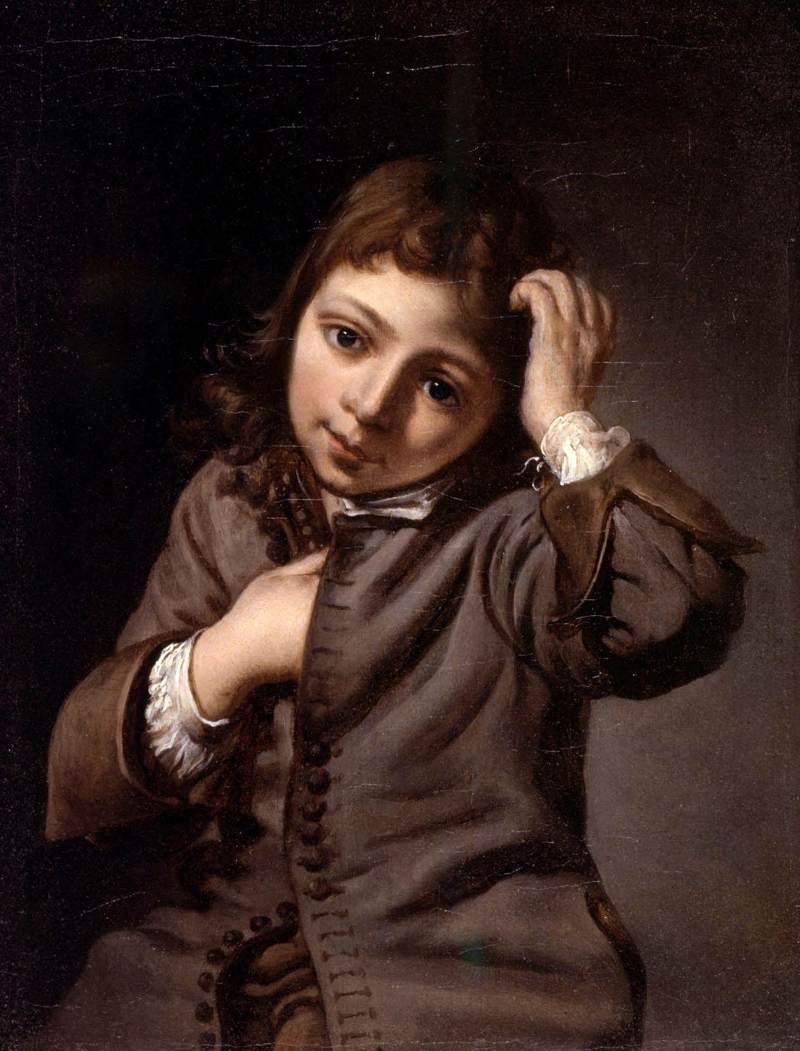
William Sweerts "Portrait of a Boy"


"Would you your son should be a sot or dunce,
Lascivious, headstrong, or all these at once;
That in good time the stripling’s finish’d taste
For loose expense and fashionable waste
Should prove your ruin, and his own at last;
Train him in public with a mob of boys,
Childish in mischief only and in noise,
...
Such youths of spirit, and that spirit too,
Ye nurseries of our boys, we owe to you:
Though from ourselves the mischief more proceeds,
For public schools ‘tis public folly feeds.
The slaves of custom and establish’d mode,
With packhorse constancy we keep the road,
Crooked or straight, through quags or thorny dells,
True to the jingling of our leader’s bells.
To follow foolish precedents, and wink
With both our eyes, is easier than to think;
And such an age as ours balks no expense,
Except of caution and of common sense;
Else sure notorious fact, and proof so plain,
Would turn our steps into a wiser train.

Oh! ‘tis a sight to be with joy perused,
By all whom sentiment has not abused;…
...A father blest with an ingenuous son,
Father, and friend, and tutor, all in one.

He will not blush, that has a father’s heart,
To take in childish plays a childish part;
But bends his sturdy back to any toy
That youth takes pleasure in, to please his boy:
Then why resign into a stranger’s hand
A task as much within your own command,
That God and nature, and your interest too,
Seem with one voice to delegate to you?
Why hire a lodging in a house unknown
For one whose tenderest thoughts all hover round your own?

The ostrich, silliest of the feather’d kind,
And form’d of God without a parent’s mind,
Commits her eggs, incautious, to the dust,
Forgetful that the foot may crush the trust;
And, while on public nurseries they rely,
Not knowing, and too oft not caring, why,
Irrational in what they thus prefer,
No few, that would seem wise, resemble her.

Now look on him, whose very voice in tone
Just echoes thine, whose features are thine own,
And stroke his polish’d cheek of purest red,
And lay thine hand upon his flaxen head,
And say, My boy, the unwelcome hour is come,
When thou, transplanted from thy genial home,
Must find a colder soil and bleaker air,
And trust for safety to a stranger’s care;
What character, what turn thou wilt assume
From constant converse with I know not whom;
Who there will court thy friendship, with what views,
And, artless as thou art, whom thou wilt choose;
Though much depends on what thy choice shall be,
Is all chance-medley, and unknown to me.
Though wouldst not, deaf to Nature’s tenderest plea,
Turn him adrift upon a rolling sea,
Nor say, Go thither, conscious that there lay
A brood of asps, or quicksands in his way;
Then, only govern’d by the self-same rule
Of natural pity, send him not to school.
No—guard him better. Is he not thine own,
Thyself in miniature, thy flesh, thy bone?

Fascinating, isn't it? The poem in its entirety can be read here.

Monday, November 23, 2009

Democracy, Authority, and Education

from my Learning Theory class post

Democracy is popular in America. It runs the nation. John Dewey, whose progressive learning theories have been largely influential on the nation's current learning practices, was a proponent of democracy. He wanted to see democracy not only in the nation, but in the public classroom, beginning at the elementary level. This would mean that, as in the nation, so in the classroom - students should have a say in their education, so that educators teach them what they are most inclined to learn, or in the way that they are most inclined to learn within the necessary bounds of the curriculum. This, it was proposed, will make the students more engaged in their education, and prevent children from becoming passive sum-scribbling serfs under the despotic rule of a loveless lecturer. Best of all, it would equip children to grow up to be good citizens of a democracy, having been immersed in its practices from their earliest years.

Now, in a fallen world, where all people are sinful and fallible, democracy has proven to be one of the best political set-ups for a nation. This is mainly because an authoritarian government has often proven deadly to both the ruler and the ruled. Absolute power absolutely corrupts the already innately corrupt. Therefore, a nation may choose to counter the particularly concentrated corruptions of the one by parceling out the power into the hands of the many. This constitutes a democracy - the governors of a nation receiving their just power from the consent of the many who are governed. If democracy has proven the best way to politically organize a nation, why not the school? Why not have teachers receiving their just power of instruction from the consent of the educated? This is in measure what Dewey was asking for.

Here the answer to the question becomes a question of authority. Putting aside secondary and higher education, in which this proposition may have credibility, I want to focus the question on the education of the young, which happens to be my particular area of study, and answer it from the Scriptures. According to the Scriptures, the environment in which children are to be nurtured and trained is not one of democracy but of authority. The one basic command given to children in the Scriptures is "obey your parents". Christian parents and teachers must therefore see this mandate as the first and most important thing for a child to learn. This does not constitute a democracy. Of course, in a democracy, citizens must submit themselves to its leaders and its rules, and obedience to parents will prepare children to be cooperative citizens. But Christian parents are not to train their children merely for good citizenship of an earthly nation. They are to bring up their children in the nurture and admonition of "the Lord". Here is a term of authority: "the Lord"! Christian parents are ultimately training their children to live under the rulership of the Lord Jesus Christ - to submissively do what he says and learn to love it. And it starts by learning to obey their parents, because Christ has commanded it. Sometimes this will mean doing things in which they do not see a point, or to which they are not innately inclined. But we are not cultivating the instincts of evolving homo sapiens, we are training young men and women in the knowledge of their Creator. This is the point of education. A good teacher will, of course, seek the good of their student by trying to make the learning enjoyable for them, even as a good governor seeks the good of the citizens. But when learning is not enjoyable - as it must necessarily sometimes be - the parents' authority wins the day, and the child must obey. When children obey their parents, they will be blessed. It's a promise. And it will not fail, even when democracies have crumbled.

Wednesday, November 18, 2009

On technical terms...

Technical terms really can get troublesome at times, can't they? And they don't do you any good unless you know what they mean. Once you know what they mean, then they can become quite useful, but only then. I think an important skill in teaching is the skill of being able to define previously boring and obscure technical terms in a way that people can really understand and remember. The technical term then becomes a handy little bag in which they can condense and carry that understanding. Of course, every time someone accumulates lots of handy little bags, they can start waving them around as if everyone knows what is in them. Fellow bag-carriers might appreciate it, but everyone else needs the bags unpacked. I guess higher education sometimes consists of a teacher handing students one bag after another and saying "Unpack that one and tell me what's in it". Then we can unpack the bags for others.

Friday, August 7, 2009

"...a hard heart is no infallible protection against a soft head"

In his Abolition of Man, C.S. Lewis points out the danger of some educators who seek to do away with all that is emotional and heartfelt in education...

“I think Gaius and Titius may have honestly misunderstood the pressing educational need of the moment. They see the world around them swayed by emotional propaganda—they have learned from tradition that youth is sentimental—and they conclude that the best thing they can do is to fortify the minds of young people against emotion.

My own experience as a teacher tells an opposite tale. For every one pupil who needs to be guarded from a weak excess of sensibility there are three who need to be awakened from the slumber of cold vulgarity. The task of the modern educator is not to cut down jungles but to irrigate deserts.

The right defence against false sentiments is to inculcate just sentiments. By starving the sensibility of our pupils we only make them easier prey to the propagandist when he comes. For famished nature will be avenged and a hard heart is no infallible protection against a soft head.”

–C. S. Lewis, The Abolition of Man